
In our parents’ generation borrowing money or having debt used to be a personal financial failure but not anymore. But if used wisely, it’s a powerful tool to build a strong financial journey.
The way we borrow has changed. In 2026, you don’t need to visit a bank, you just need your phone to borrow any amount you want. We have seen “No Cost EMI”, “Easy EMI” which sounds good and exciting, but it often pushes you into a debt trap where you don’t even realize what harm you are doing until the monthly EMI starts eating your savings.
In this guide, you will understand the reality of the Indian credit market today, the new rules protecting you, and you will learn how to borrow without losing your peace of mind.
The 2026 Shift
India’s borrowing habits have changed a lot. As of early 2026, digital loans make up over 51% of all retail credit. We’ve moved from “borrowing for a house” to “borrowing for a weekend trip” or even a grocery bill. It has reached a point where we can’t even make a basic purchase without borrowing.
Here’s what you need to know about the current trend:
Nearly 40% of all credit card transactions in India are now happening via UPI. By linking RuPay cards to UPI, we’re spending credit on small, daily items like coffee or petrol. This “smooth” spending makes it very easy to lose track of your total debt.
Gen Z & Millennials Leads the Way. Borrowers under 35 now account for roughly 60% of the digital lending market.
For the first time, India’s household debt has climbed to over 41% of the GDP. We are earning more, but we are also leaning on credit to sustain our lifestyles.
So, Is Your Debt Working for You?
Not all debt is “bad,” but in 2026, the line is fading fast.
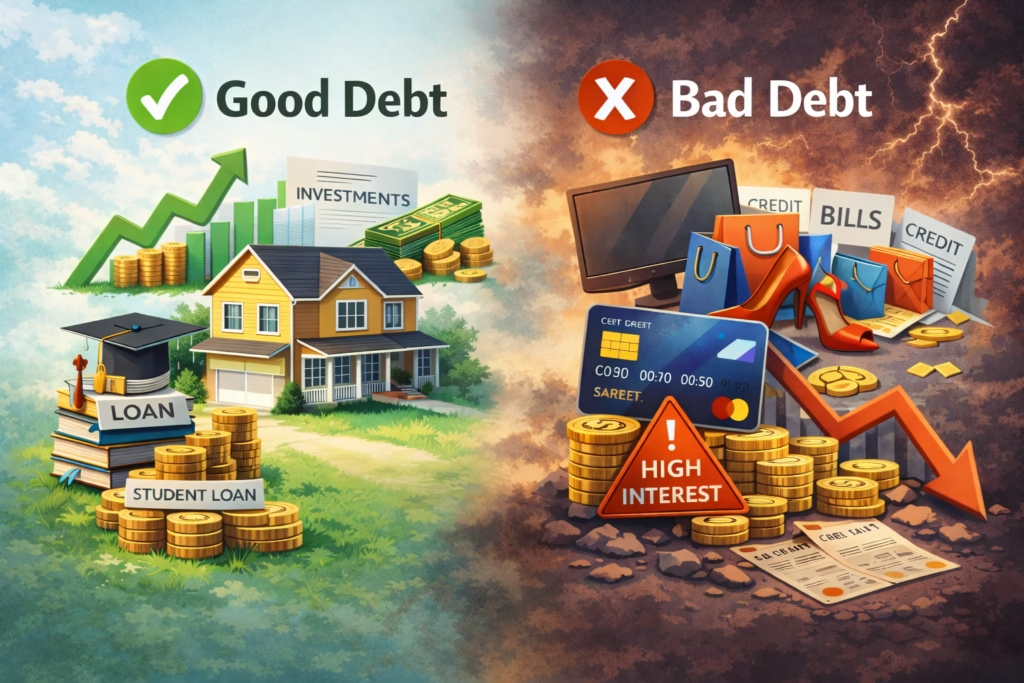
1. The Good Debts
These are loans where the asset usually grows in value or helps you earn more.
- Home Loans: The best kind of debt, especially with current tax benefits.
- Education Loans: An investment in your future.
- Business/Equipment Loans: Anything that directly puts money back in your pocket.
2. The Bad Debts
These are “depreciating” loans. By the time, you finish paying, the item is worth half of what you paid or it is already gone.
- Credit Card Rollovers: Credit cards are charging up to 45% APRs right now. If you don’t pay the full bill, the remaining small balance starts growing fast. It’s the quickest way to fall in debt trap.
- Lifestyle EMIs: Taking a 12-month EMI for a 3-day vacation or a smartphone that will be old or outdated in six months.
- Unplanned BNPL: “Buy Now, Pay Later” is now legally a digital loan. If you miss a ₹500 payment, it hits your CIBIL score just as hard as a missed home loan payment.
New RBI Rules Every Borrower Must Use in 2026
The Reserve Bank of India has finally decided to protect the consumers and so has introduced several rules to protect you from getting trapped. If your lender is not following these, look somewhere else.
The Key Facts Statement (KFS): RBI has made it mandatory for lenders to give you a one page summary before you sign. It must show the Annual Percentage Rate (APR) which includes interest plus all processing fees and insurance. If it is not in the KFS, they cannot legally charge you for it later.
Zero Foreclosure Charges: As of January 1, 2026, RBI has prohibited foreclosure or prepayment penalties on all floating-rate retail loans. This means if you have extra cash, you can close your loan early for free.
The 3-Day Cooling-Off Period: If you take a personal loan and suddenly realize you don’t need it, you have a 72 hours window to return the principal amount without any penalty (you only pay the interest for those 3 days).
How to Borrow Like an expert (The 30% Strategy)
Before you Apply, make sure to follow these.
The 30% Stop: Try to keep your total monthly EMIs (Home + Car + Personal + BNPL) under 30-35% of your take-home pay. If you’re at 45%, you are one medical emergency away from a crisis.
Check the “Total Cost,” Not the EMI: A “Low EMI” often hides a very long tenure, meaning you end up paying for the item twice over in interest.
Emergency Buffer First: Never borrow to the point where your savings account hits zero. Always keep 3 to 6 months of expenses in a liquid fund before taking on a new liability.
Juggling Multiple Loans? Here’s How to Take Control
If you have multiple EMIs and feeling the walls close in, don’t worry. Lets understand how to sort this out. You just need a plan to knock them down one by one. There are some ways to do this:
1. The “Kill the High Interest” Strategy (Avalanche)
This is for you if you hate the idea of banks getting rich off your interest. You focus everything on the loan that’s costing you the most.
How to do it: Pay the minimum on everything, but put every extra rupee into the loan with the highest APR. This usually means attacking your credit cards first (at 45%), then those instant loan apps, and leaving your home loan for last.
The downside: If your highest-interest loan is also a huge amount, it might take months before you feel like you’re making progress. You need serious patience for this.
2. The “Quick Wins” Strategy (Snowball)
If you’re feeling overwhelmed by too many due dates, this one is for you.
How to do it: Ignore the interest rates for a second. Look for your smallest balance, maybe a ₹5,000 BNPL bill, and kill it first.
Why it works: Closing a loan feels incredible. It’s one less one less headache every month. Once that’s gone, you take that money and “roll” it into the next smallest bill.
The downside: You might pay a bit more in total interest over time, but for many, the peace of mind is worth the extra cost.
3. The expert Move: Pay a Little More Each Year
Most Indians don’t realize that time is more expensive than interest. If you have a long-term loan, like a home loan, use the “5% Rule.”
As your salary goes up, increase your EMI by just 5% every year. Or just make one extra EMI payment annually. This can cut a 20-year loan down to 12 or 13 years without you even feeling the pinch.
Tip: If you prepay, the bank will ask if you want to lower your monthly EMI or reduce your “Tenure” (time). Always choose Tenure. It saves you lakhs in interest, while lowering the EMI just gives you a little pocket money while keeping you in debt forever.
4. The “Reset Button”: Debt Consolidation
If your life is a mess of 5+ different app loans, you can simplify everything by taking one large personal loan to pay them all off.
The Benefit: You go from 5 “expensive” headaches to one single, cheaper EMI. It cleans up your CIBIL score and your calendar.
The issue: This only works if you cut up the cards. If you clear your debt and then start swiping those cards again, you’ll end up with double the debt and no way out.
Final words
As can be understood, borrowing in 2026 is a double edged sword. It’s never been easier to get money, but it’s also never been easier to ruin your financial future before you even turn 30.
Apps and banks will keep coming up with “exciting” ways for you to spend money you haven’t earned yet. Nobody is asking you to avoid borrowing entirely, which is almost impossible today, but to stay in control. Use credit to buy things that make your life better or improve your financial condition in future, not just to keep up with an Instagram lifestyle that you’ll be paying for over the next three years.
Smart borrowing isn’t about how much a bank is willing to give you; it’s about how much you can actually sleep with at night. Try to keep your EMIs small and your emergency fund ready. Don’t let the ease of borrowing today turn into a debt trap that follows you around for years.
For regular personal finance related updates do follow us on Facebook and Instagram
For any queries do Contact Us